Author: Santiago Tavera (Page 4 of 5)

STÉPHANE QUERREC- TO MAKE A BREAK, TO MAKE A CUT: MEDIA ART IN PUBLIC SPACE

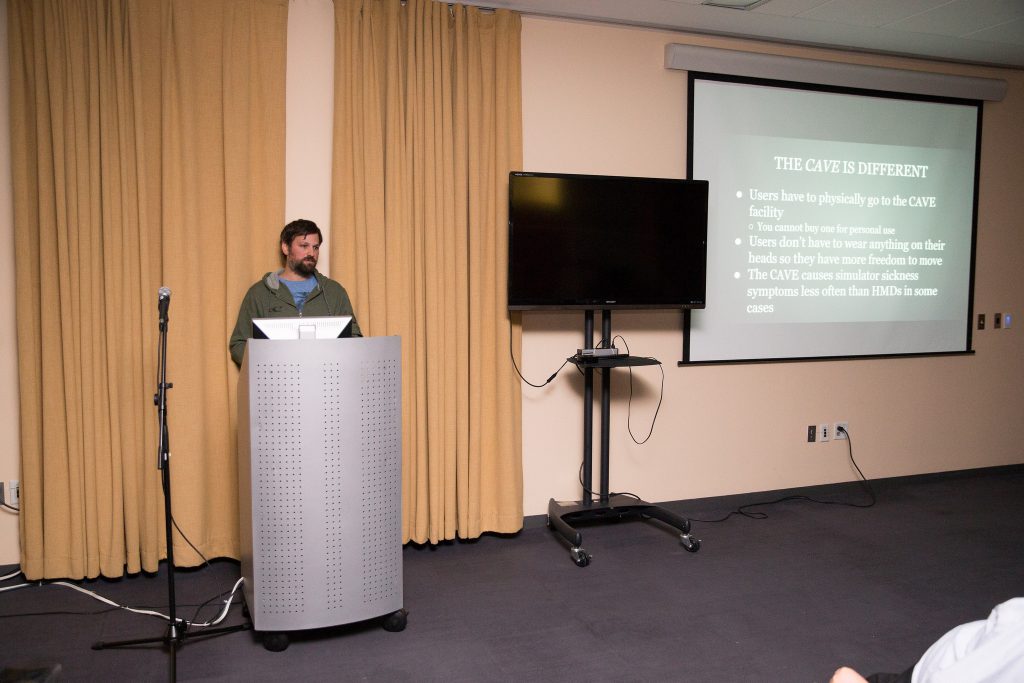
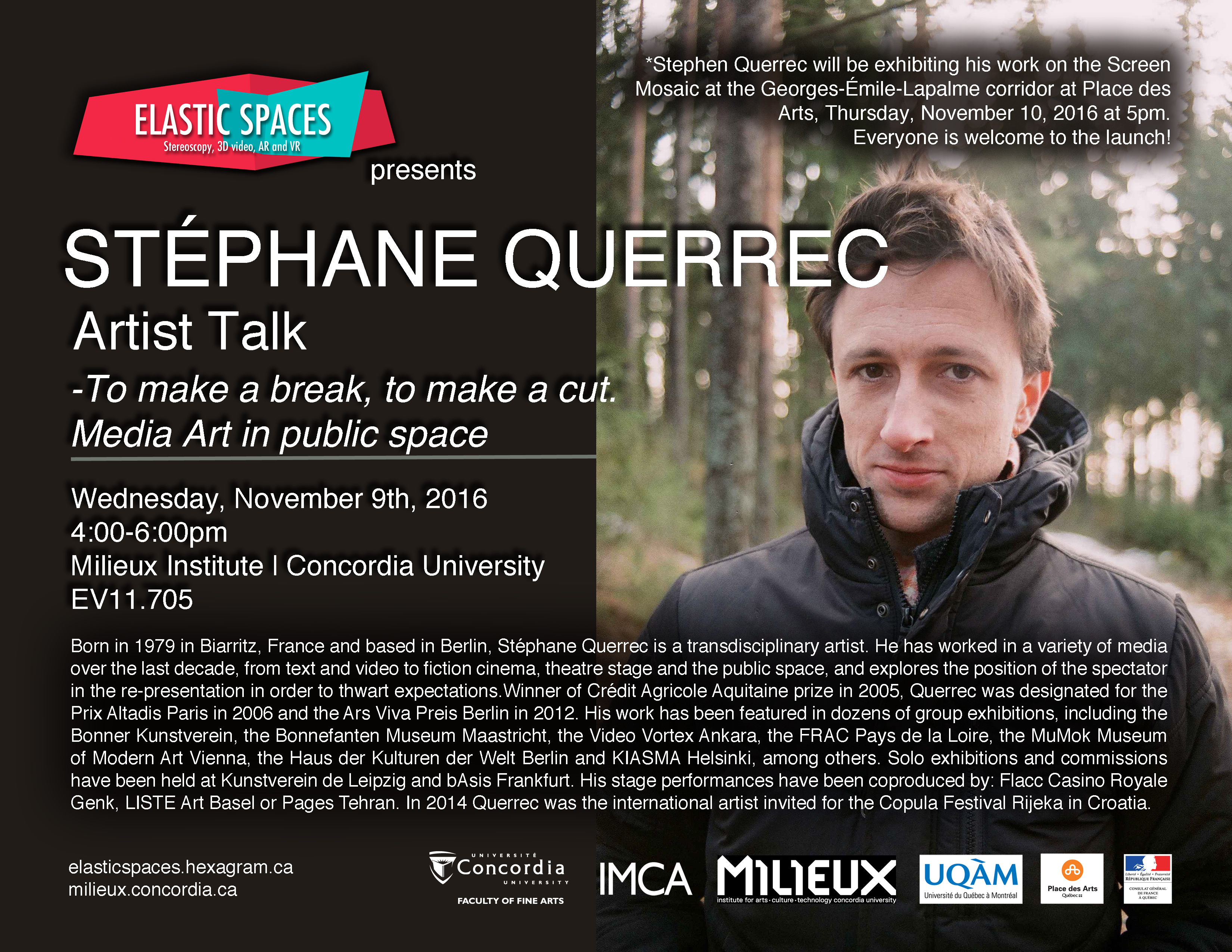
On Wednesday, November 9th, 2016, The Elastic Spaces art lab invited visiting artist Stephane Querrec (a French artist based in Berlin) to talk about his artistic process at Concordia University with over 30 students, researchers and faculty members. Gathered in the 11th floor resource centre of Milieux Institute for Arts, Culture and Technology, Querrec shared his exploration of public spaces through the use of video, performance and text-based works. After discussing  his interest in pedestrian spaces to confront, challenge and invite viewers to become active participants in his work, Querrec invited the audience to engage in a conversation to discuss the possible challenges, ethical and technical constraints with these type of works. Querrec focused on his use of text to question the voice of the artist and the spectator, and how to place the work in a middle ground where the message is affected by the general public.

Stephane Querrec’s 5 week residency in Montreal culminated in the creation of his latest project, The Complaint, exhibited at the  Screen Mosaic at the Georges-Émile-Lapalme corridor at Place des Arts. This work opened to general public Thursday, November 10th, 2016 at 5pm.
STEPHANE QUERREC TO MAKE A BREAK, TO MAKE A CUT: MEDIA ART IN PUBLIC SPACE

No Slide Found In Slider.

Visiting artist talk- Stéphane Querrec

The Elastic Spaces art lab is proud to present Stéphane Querrec, a visiting artist from Berlin who is making a work for the Screen Mosaic at the Georges-Émile-Lapalme corridor at Place des Arts, to be launched Thursday, November 10, 2016 at 5pm.

He will also be giving an artist talk:

Wednesday, November 9, 2016
4pm  to 6pm
@ Milieux Institute at Concordia University
Room: EV11.705 (11th floor resource centre)

He will talk about his process of working as an artist in the public pedestrian  space at the Place des Arts, addressing the challenges, the ethical and technical constraints,  and his responsibilities as an artist with this project.  This talk will be in English and it’s free and  open to the public.

This event should be of interest to media artists, researchers and students studying  media arts, site specific works, sculptural installation in public spaces and the engagement of viewers in public pedestrian spaces.

artisttalknov2016

Forest! presentation at the IVLA2016

conference_640x747

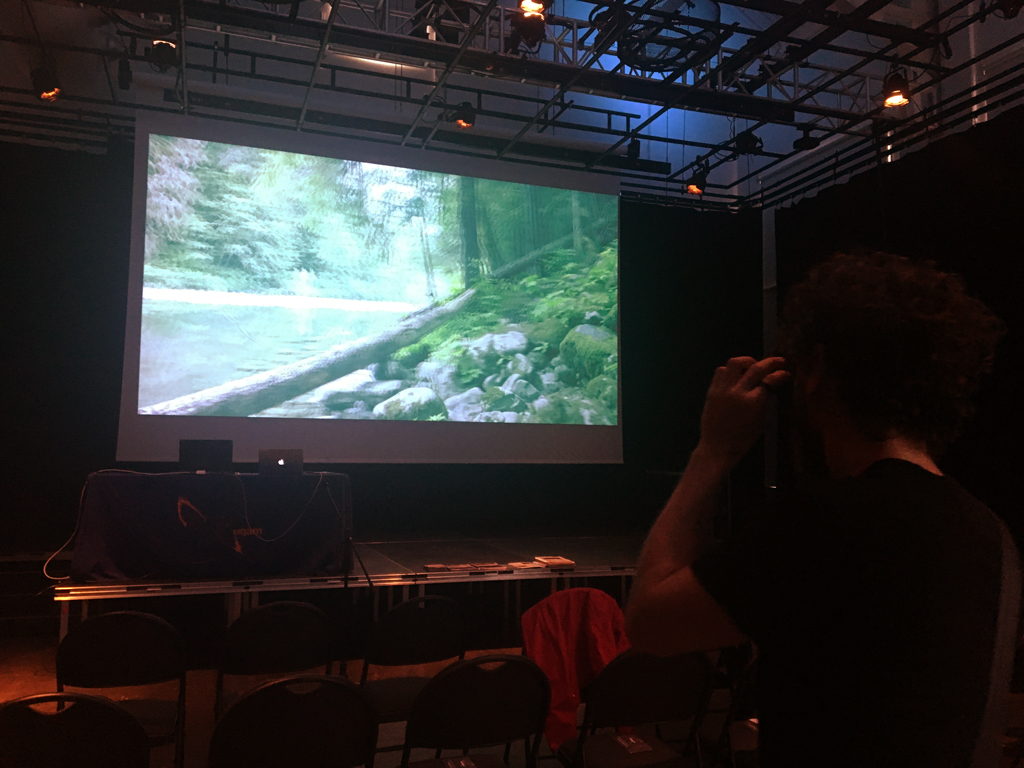
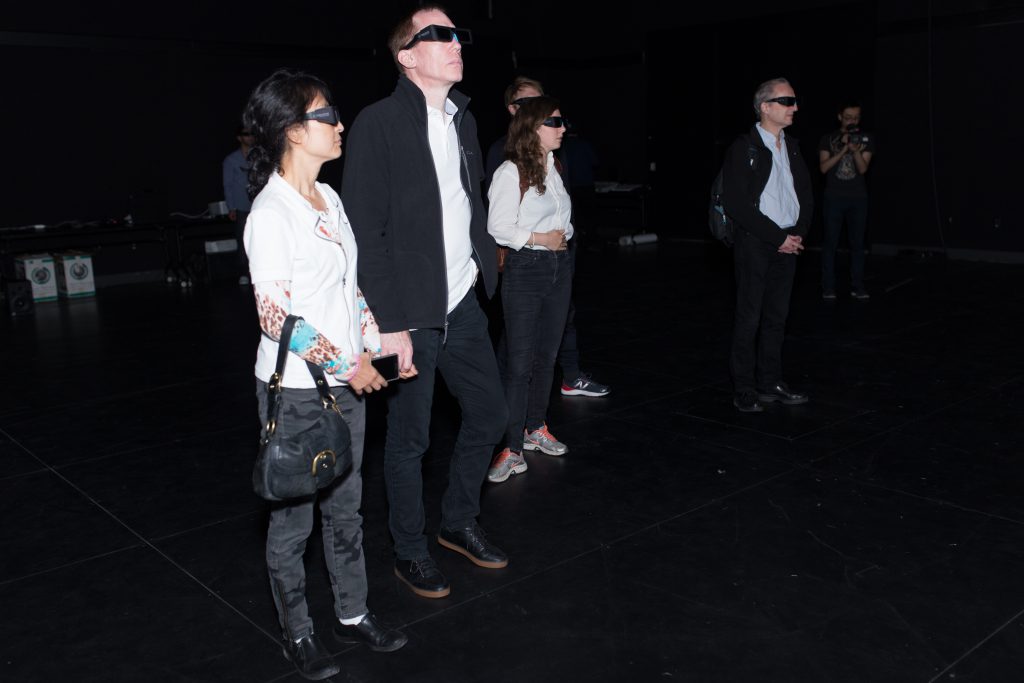
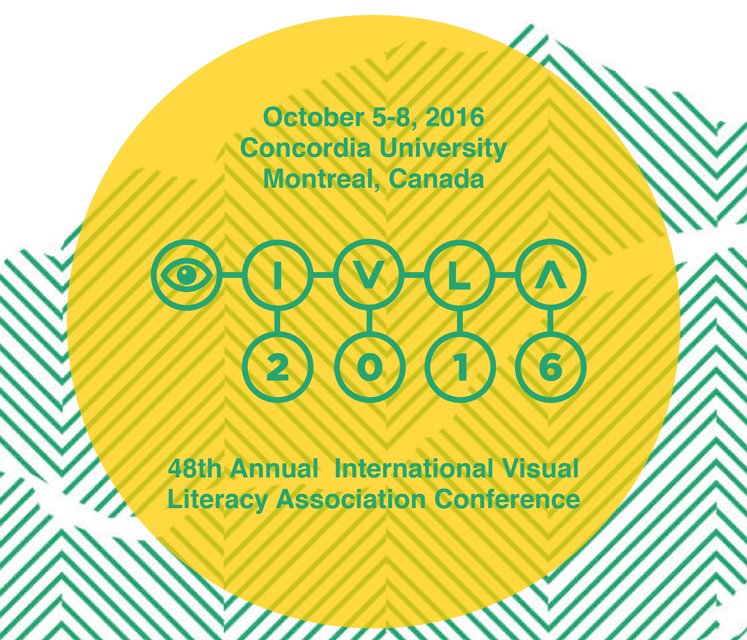
Leila Sujir’s latest project, Forest! was presented during the 48th Annual International Visual Literacy Association Conference at Concordia University, October 7th, 2016. This was part of a walkthrough presentation series during the conference.


ABOUT IVLA :

Visual Literacy is already a field of multidisciplinary investigation. How might it also become a field of multisensory and/or intersensory investigation? For example, how does seeing as a way of sensing and making sense of the world differ from reading, or touching, or dancing? As Isadora Duncan famously remarked: “If I could tell you what it meant, there would be no point in dancing it!” ? Or, how can the insights derived from the study of Visual Literacy be extended to other modalities of sense, such as sound studies? In asking these questions, the conference seeks to revisit and recuperate the original definition of “Visual Literacy.” In the words of John Debes (Co-founder of the IVLA), Visual Literacy refers to “a group of vision competencies a human being can develop by seeing and at the same time having and integrating other sensory experiences” (1969). More recently, Brian Kennedy (Director of the Toledo Museum of Art) proposed that “Visual Literacy is the key to sensory literacy” (2014). This suggests that the past and future of Visual Literacy lies with engaging the senses.

www.ivla.org

image-1-sujir-forest-2016 image-2-sujir-forest-2016

Entertainment Technology Summit at CCIFF 2016

http-cdn-evbuc-com-images-23808251-175033001009-1-original

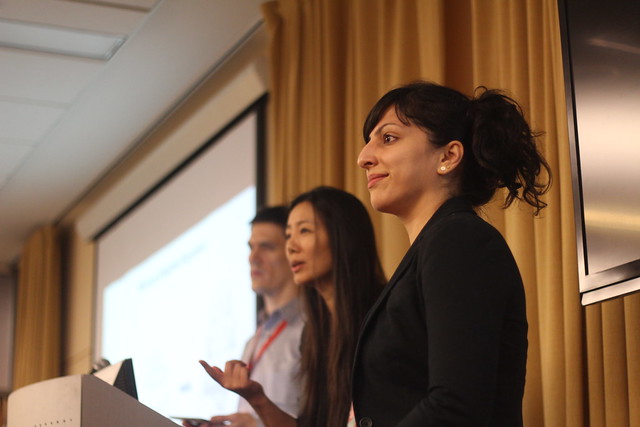
Charalambos Poullis, Leila Sujir and Santiago Tavera presented their research and latest projects September 17, 2016 at the Entertainment Technology Summit part of the Festival International du Film Canada-China 2016 at Concordia University.


The Entertainment Technology (ET) Summit will be crucial in constructing a platform of mutual academic learning and communication in the field of film production. Film technology specialists will discuss and exchange thoughts on cutting-edge film technology. CCIFF will also invite international keynote speakers and well-known Canadian and Chinese film companies to participate in the summit. The ET Summit will offer an informative and dynamic atmosphere and opportunities for networking and discovering new technology.

The ET Summit will be held on September 17, 2016, at 9:00am. Film technology specialists will discuss multimedia technology and post-production skills, and brainstorm with the other film producers on near and long-term possibilities for collaboration. CCIFF will also invite famous Canadian and Chinese film and entertainment companies to participate, providing the summit with an informative and dynamic atmosphere and offer opportunity for networking and forming co-production initiatives.

Co-organized by: Department of Computer Science & Sofeware Engineering (CSE), Faculty of Engineering & Computer Science (ENCS), Concordia University

Supported by: Faculty of Engineering & Computer Science (ENCS), Concordia University


Entertainment Technology Summit and Exhibition

www.cciff.ca 


Forest Breath- A Work in Progress

Video projection, 2016 – 2019

This large format video projection project arose with the consideration of the forest as a space of research as well as contemplation, marking the beginning work towards a series of video installations within a  solo exhibition  (2019) at the Art Gallery of Greater Victoria with curator Haema Sivanesan.

After the preliminary work in June 2016, Sujir discovered the work of Suzanne Simard, UBC forestry professor, who talks about the forest floor as the place where the old growth trees function as archive for the grove, communicating through the forest floor, in a network we would perhaps liken to the internet. Additionally, in May 2017,  Sujir was an observer at the symposium lead by University of Victoria’s ethnobotanist Nancy Turner:  Indigenous Peoples’ Land Rights and the Roles of Ethnobotany and Ethnoecology: Strategies of Canada’ Future.

Sujir began in the Walbran with cinematographer Chris Kroitor, with a 3D rig fitted with two Sony 65 cameras (8K capability), to allow the viewer to stand in a forest of moving pixel images, in the same relation to the trees as they would have within the Walbran forest.

The experiments with time and space include a pull parallax, moving the space from relative flatness to an extended 3D: the space embraces  the viewer through the duration of a four to five minute shot. The work in progress shows the raw clips, prior to color correction or editing. Sujir’s intention is to work spatially with both the moving image and sound, for space as volume to be able to be perceived through the body.

The Walbran is scheduled for clear cut logging, which would mean the loss of this archive of time and space, held in the old growth trees.

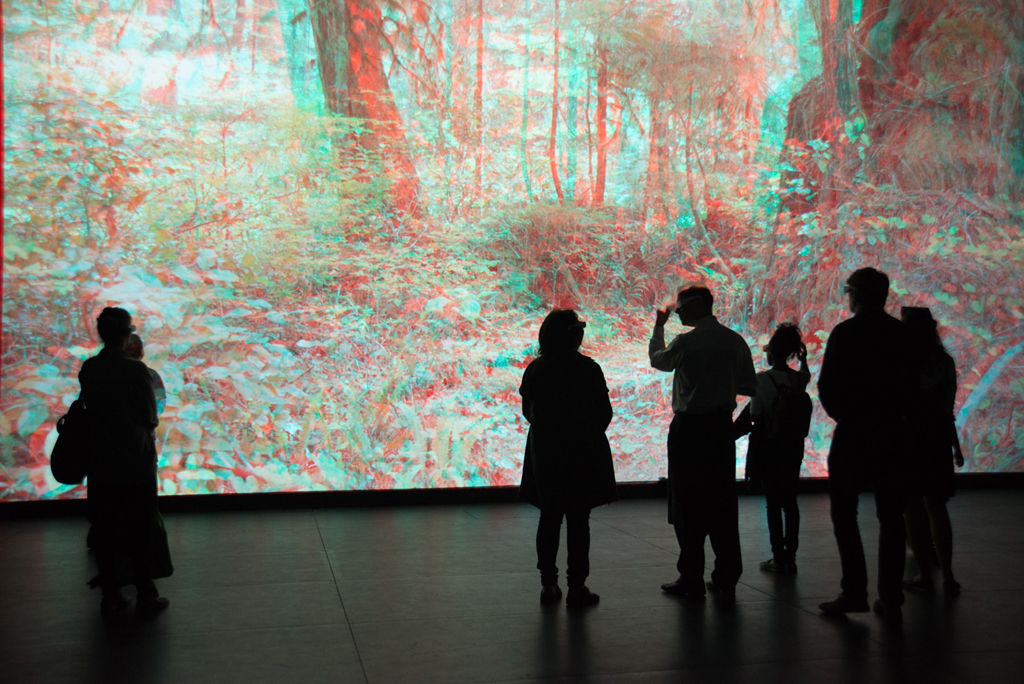
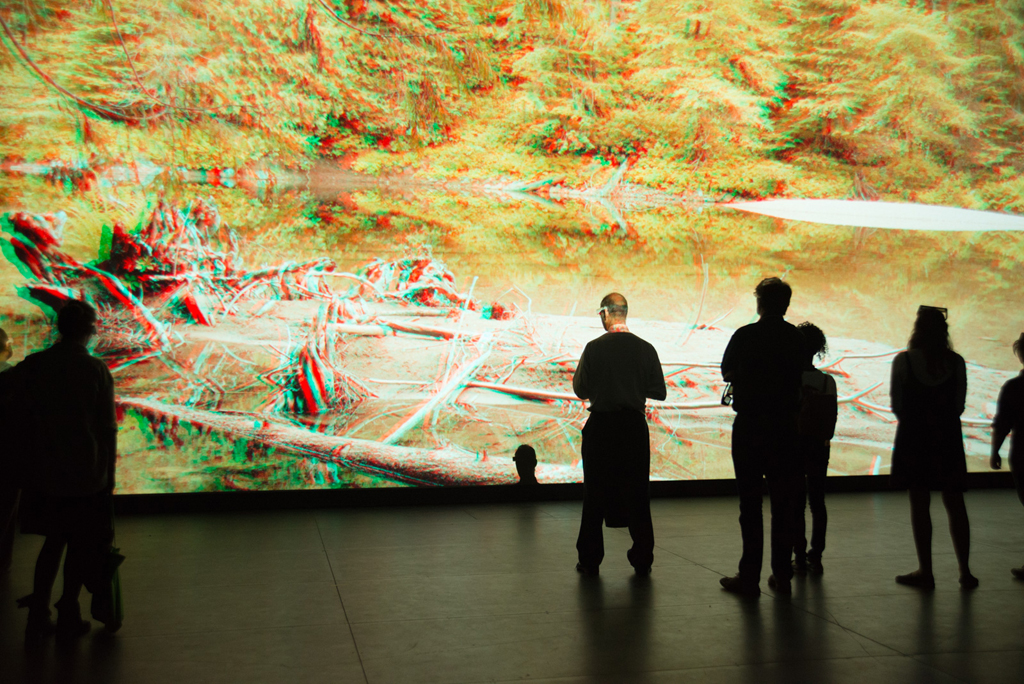
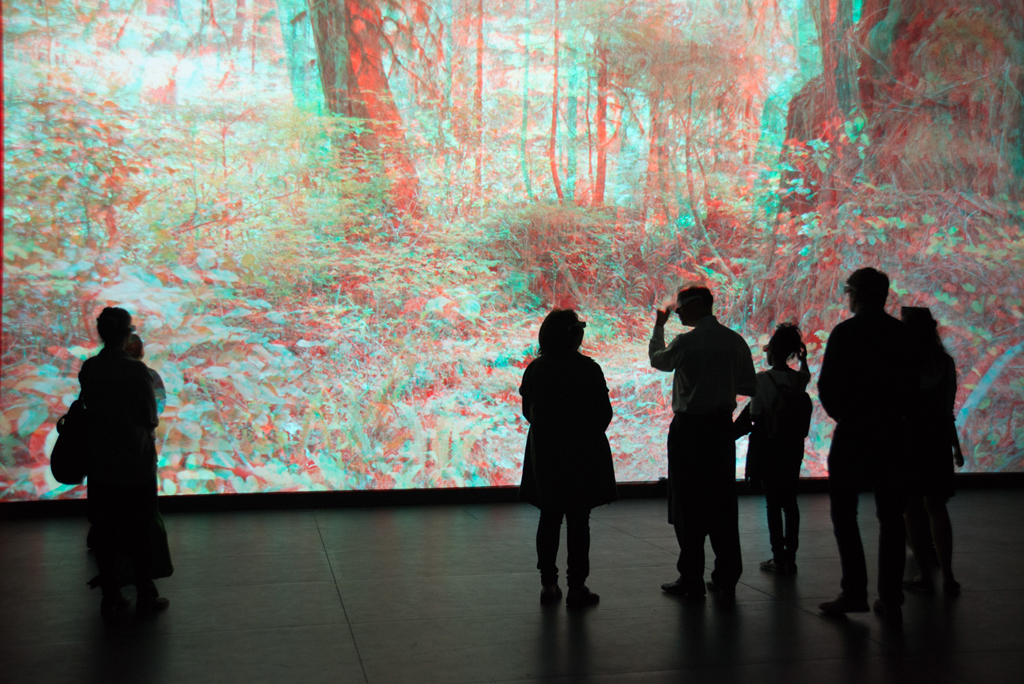
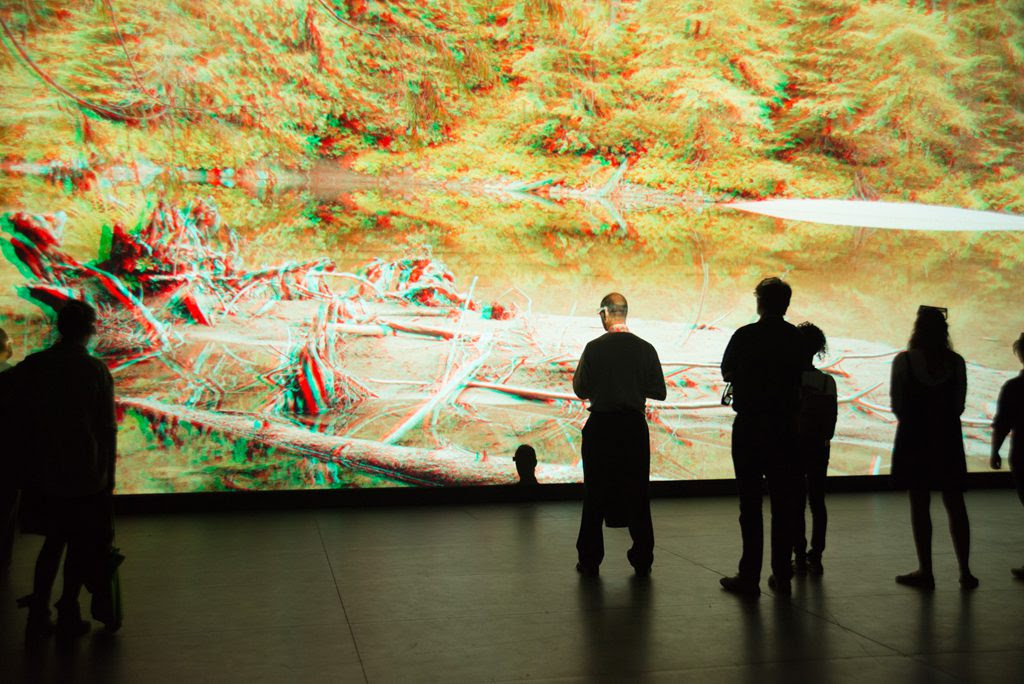
Images of Forest Breath, (2016-): work in progress, stereoscopic 3D Video installation.

Please view using anaglyph glasses (red at the left).


3D Virtual & Physical Models

This summer the Elastic Spaces team at Concordia University has been  using photogrammetric techniques in order to develop 3D virtual models, like the one below. A series of photos of architectural facades are rendered and put together in 3D software. These models of both the Roman Baths in the UK and the Grey Nuns Building in Montreal, are being constructed as physical structures that will help us when doing 3D projections test, and they will be used to further assist Prof. Poullis’ Smart Projection Mapping project.

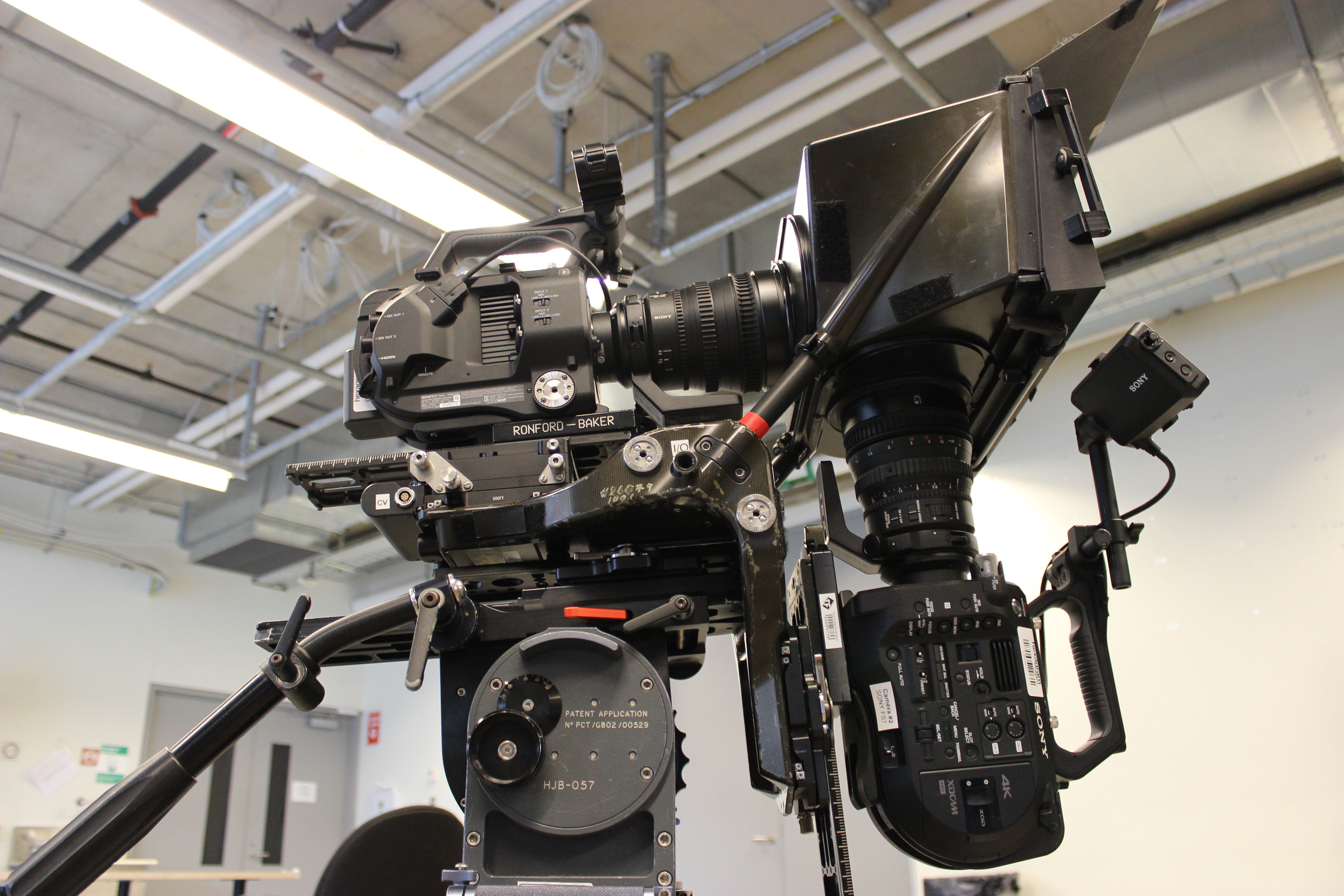
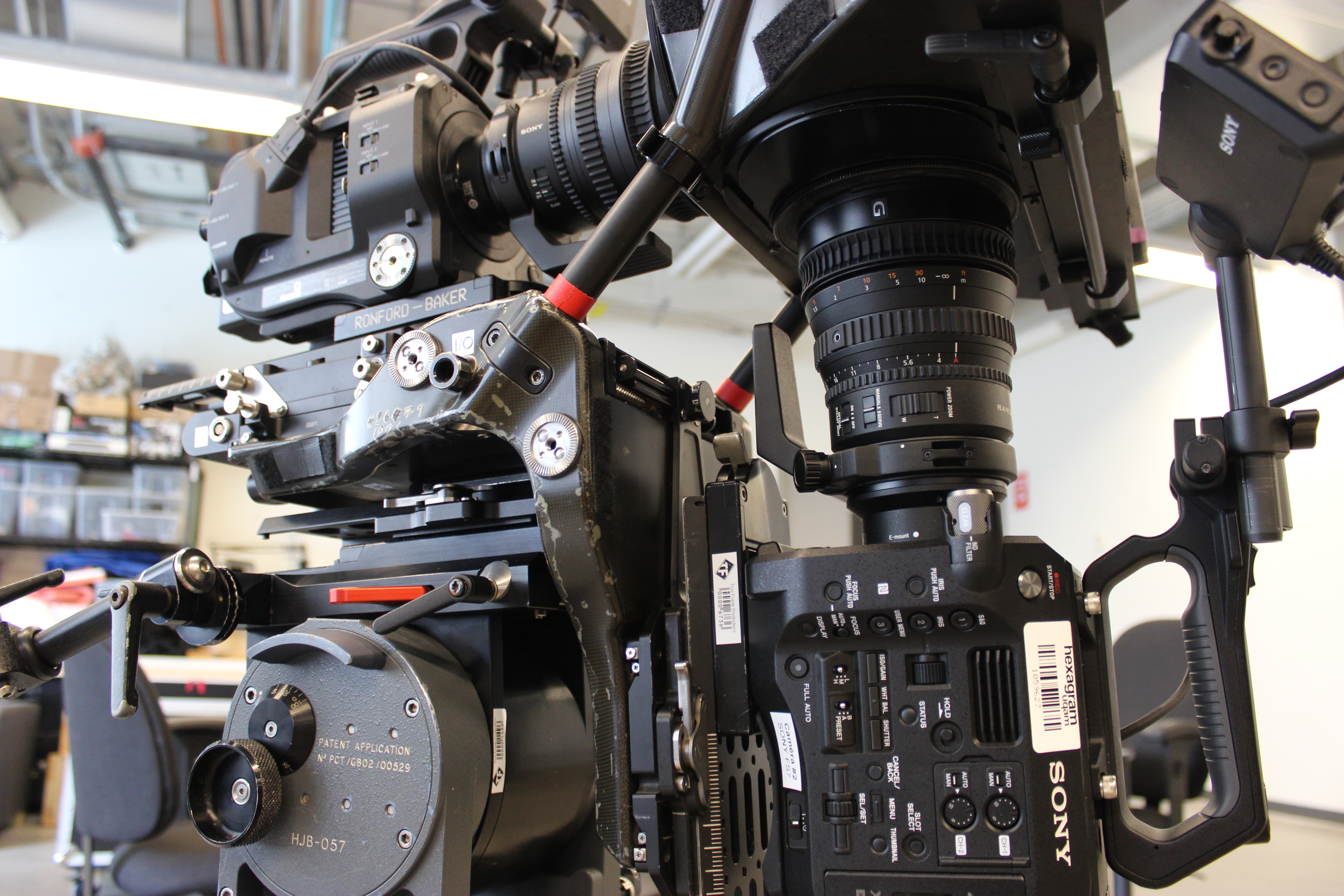
Freestyle 3D rig with two Sony FS7 cameras Tests

We have just started testing the Freestyle 3D rig by P+S Technik with two Sony FS7 cameras, lent to us by Hexagram UQAM.

The idea is to see if they are suitable for our next 3D shootings. Their light weight, combined with their ability to record in very good quality (4K) makes them great candidates to operate in adventurous locations, like the Old-growth forests of Victoria, BC, for example.

Now that we know they can be mounted on the rig, let’s see how they align on the screen!


« Older posts Newer posts »

© 2025 Elastic Spaces

Theme by Anders NorenUp ↑

Cookie settings